

Huntsville, Alabama, August 3, 2025
News Summary
In northeast Alabama, conservationist Bill Finch is leading significant biodiversity research at the Paint Rock Forest Research Center, a 4,000-acre site. The center focuses on forest dynamics, genetic diversity, and the impacts of climate change on local ecosystems, highlighting Alabama’s status as a global biodiversity hotspot. Recent discoveries include the rediscovery of a Hawthorn tree species thought extinct since 1914, demonstrating the importance of ongoing research in preserving Alabama’s unique ecosystems.
Huntsville, Alabama: Conservationist Bill Finch Leads Biodiversity Research Efforts at Paint Rock Forest Center
In a groundbreaking initiative in northeast Alabama, conservationist Bill Finch is spearheading biodiversity research at the Paint Rock Forest Research Center, which spans 4,000 acres within The Nature Conservancy’s Sharp Bingham Preserve. Finch’s extensive research is focused on understanding forest dynamics, genetic diversity, and the impact of climate change on local ecosystems, making significant strides in a region renowned for its rich biodiversity.
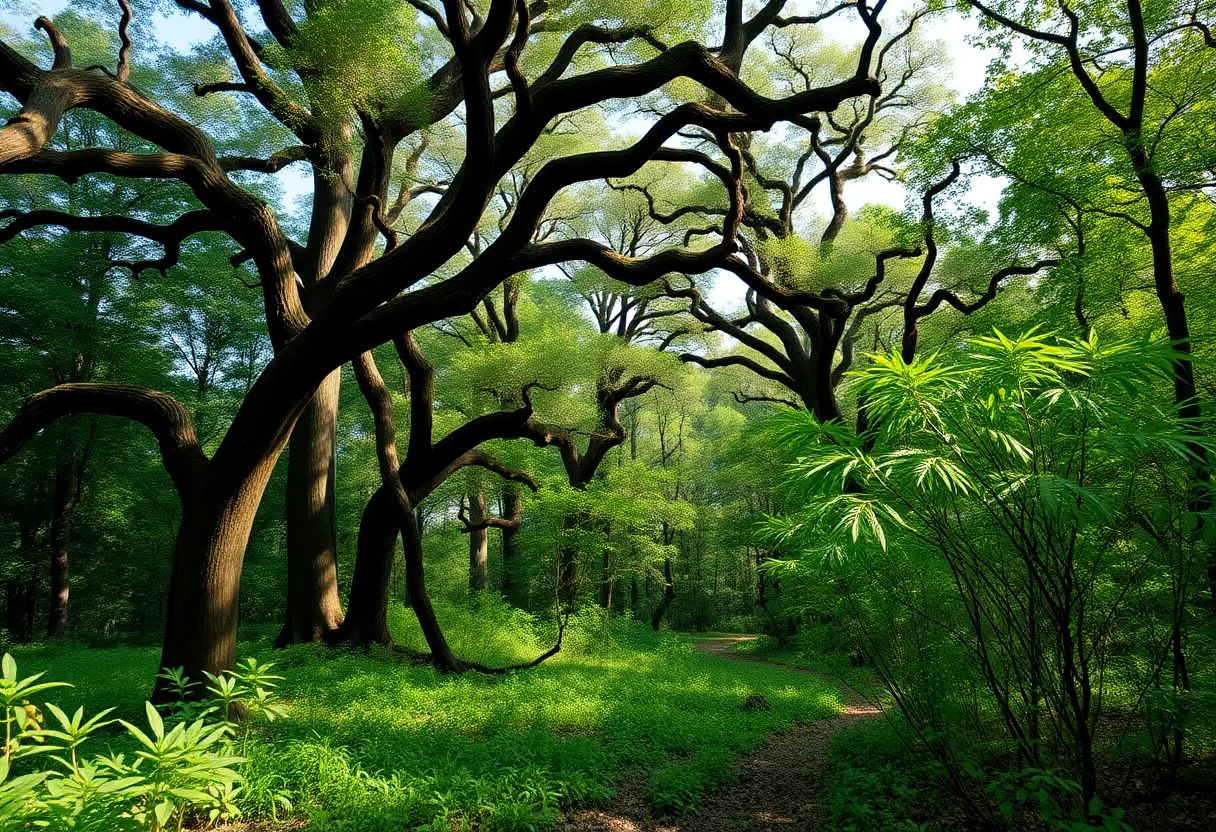
The Paint Rock Forest is celebrated as one of North America’s most biodiverse regions, home to 40 native oak species and a diverse array of magnolia and hickory trees. It also boasts the highest concentration of freshwater aquatic biodiversity in the United States. Recent discoveries within the forest, including the rediscovery of a Hawthorn tree species previously believed to be extinct since 1914, underscore the importance of ongoing research in this area.
In collaboration with experts from the University of West Alabama and from South Carolina, Finch confirmed the identity of the rediscovered Hawthorn species, marking a notable achievement in understanding the area’s unique flora. The center has meticulously mapped 150 acres of the forest into 1,600 survey plots, measuring over 86,000 trees to better analyze various species and their adaptations to changing environmental conditions.
Research at the Paint Rock Forest Research Center extends beyond tree studies; Finch is also investigating cave ecosystems, aquatic species, and conducting numerous plant and animal surveys. The aim is to enhance understanding of species survival and adaptation to climate fluctuations, with particular attention paid to the challenges posed by climate change. Finch estimates that if climate change remains unchecked, one-third of all species could be at risk.
Alabama has been identified as a global biodiversity hotspot, and the research center plays a crucial role in documenting new species and understanding how plants and ecosystems can adapt to evolving environmental conditions. Recent natural events, such as tornado damage, have opened new research avenues concerning ecological resilience and species adaptations. Additionally, the center hopes to become a vital resource for genetic material to assist in restoration efforts in other regions.
Finch, whose career spans over five decades in environmental journalism and conservation, has worked with prominent scientists, including E.O. Wilson. His efforts emphasize the importance of biodiversity as a strategic “tool” for navigating future challenges posed by climate change. Understanding the intricate relationships between species and their environments may provide insights critical for broader ecological restoration initiatives.
In addition to the valuable research endeavors, Finch plans to establish a library at the center to house a collection of biodiversity literature, which will include books donated by E.O. Wilson following his passing. This addition aims to support ongoing research and education efforts related to biodiversity conservation and ecological studies.
Background on Conservation Challenges
Historically, human activities, including dam construction, have contributed to species extinction in the region. Finch and his team are working to combat these ongoing threats by fostering local partnerships and engaging in research that recognizes the necessity of documenting species and their capacities for adaptation to climate change. Such work at the Paint Rock Forest Research Center plays an essential role in promoting biodiversity and ecosystem resilience in Alabama and beyond.
Conclusion
Through innovative research and collaboration, Bill Finch and the Paint Rock Forest Research Center are leading vital efforts to enhance the understanding of biodiversity in Alabama, contributing to both local and global ecological conservation efforts.
FAQs
What is the Paint Rock Forest Research Center?
The Paint Rock Forest Research Center is a biodiversity research facility located in northeast Alabama, within The Nature Conservancy’s Sharp Bingham Preserve, focused on studying local ecosystems and species.
What kind of research is being conducted at the center?
The center conducts research on forest dynamics, genetic diversity, and the impacts of climate change on local biodiversity, as well as exploring cave ecosystems and various species surveys.
Why is Alabama considered a biodiversity hotspot?
Alabama is home to an exceptional variety of species, including 40 native oak species, significant magnolia and hickory diversity, and it hosts the highest concentration of freshwater aquatic biodiversity in the United States.
What recent discoveries have been made at the research center?
One notable discovery includes the rediscovery of a species of Hawthorn tree that was believed to be extinct since 1914, highlighting the unique flora of the Paint Rock Forest.
How does climate change impact local biodiversity?
Climate change poses significant risks to biodiversity, with estimates suggesting that one-third of all species may be threatened if current trends continue. Research at the center aims to assess how various species can adapt to these changes.
Key Features of the Paint Rock Forest Research Center
| Feature | Description |
|---|---|
| Location | Northeast Alabama, within The Nature Conservancy’s Sharp Bingham Preserve. |
| Size | 4,000 acres dedicated to biodiversity research. |
| Research Focus | Forest dynamics, genetic diversity, and climate change impacts. |
| Notable Discoveries | Rediscovery of a Hawthorn tree species thought to be extinct since 1914. |
| Biodiversity Status | Region home to 40 native oak species and high freshwater biodiversity. |
| Future Plans | Create a library of biodiversity literature to support research and education. |
Deeper Dive: News & Info About This Topic
HERE Resources
Hammerhead Worms Spotted in North Alabama Following Rainfall
Additional Resources
- Alabama News Center: Paint Rock Forest Research Center
- Wikipedia: Biodiversity
- Bham Now: New Research Center Showcases Alabama’s Biodiversity
- Google Search: Paint Rock Forest
- CBS 42: E.O. Wilson’s Books Donated
- Encyclopedia Britannica: Conservation
- The Bama Buzz: Huge Spiders in Alabama
- Google News: Alabama Biodiversity
- Bham Now: Alabama Natural Wonders 2020


Author: STAFF HERE HUNTSVILLE WRITER
The HUNTSVILLE STAFF WRITER represents the experienced team at HEREHuntsville.com, your go-to source for actionable local news and information in Huntsville, Madison County, and beyond. Specializing in "news you can use," we cover essential topics like product reviews for personal and business needs, local business directories, politics, real estate trends, neighborhood insights, and state news affecting the area—with deep expertise drawn from years of dedicated reporting and strong community input, including local press releases and business updates. We deliver top reporting on high-value events such as Panoply Arts Festival, Rocket City Brewfest, and Huntsville Comic & Pop Culture Expo. Our coverage extends to key organizations like the Huntsville/Madison County Chamber of Commerce and HudsonAlpha Institute for Biotechnology, plus leading businesses in aerospace, defense, and manufacturing that power the local economy such as Boeing, SAIC, and Mazda Toyota Manufacturing. As part of the broader HERE network, including HEREBirmingham.com, we provide comprehensive, credible insights into Alabama's dynamic landscape.